Digital Focus
How to Focus When Your Phone Keeps Pulling You Away
I spent a long time thinking I had a discipline problem. I did not. I had an environment problem — and once I understood the difference, everything about how I work changed.
Holdscroll
Practical articles on digital focus, study habits, remote work, and doing meaningful work in a distracted world.
I spent a long time thinking I had a discipline problem. I did not. I had an environment problem — and once I understood the difference, everything about how I work changed.

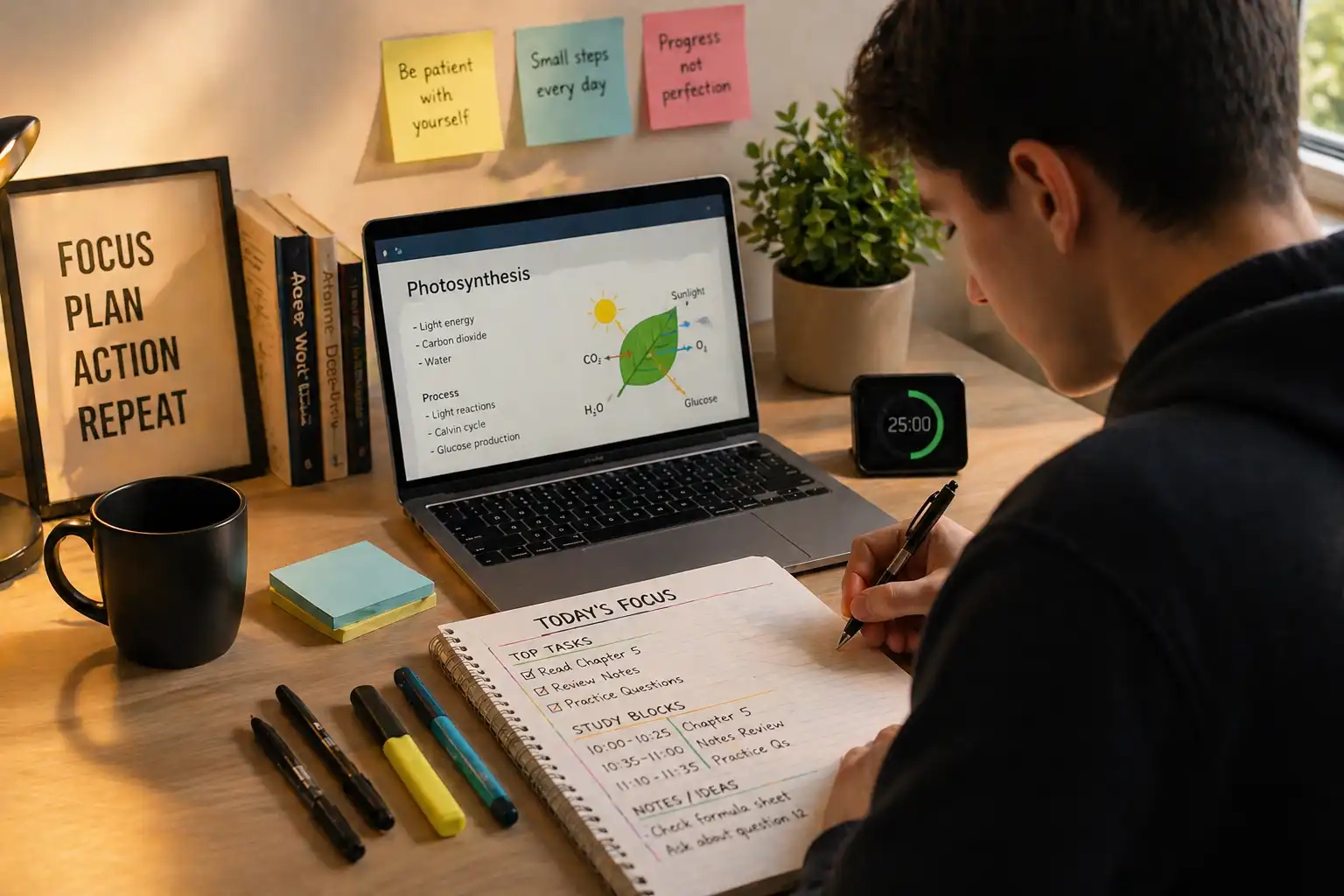
Long study sessions often fail because they are too vague and too demanding. A short, focused 25-minute system can make studying feel easier to start and easier to repeat.

The problem with remote work is not discipline — it is the absence of the environmental signals that office life provided automatically. Building those signals deliberately changes everything.

Research shows your phone drains cognitive capacity even when you are not using it. Desk design is not an aesthetic choice — it is a decision about how much of your brain shows up to the work.

If one study session turns into ten open tabs, random searches, and lost time, the two-tab rule can help you keep your attention on the work that actually matters.

I spent months feeling busy all day and having little to show for it by evening. The problem was not the work. It was what I was doing between every piece of work — and what that was costing me without my realizing it.

If your assignments, deadlines, notes, and reminders are scattered everywhere, one simple notebook system can make studying feel less chaotic.

When the same laptop is used for work, studying, entertainment, and messages, your brain may never feel fully done. A shutdown routine creates a cleaner ending.

Some days you do not need a bigger productivity system. You need a short reset that clears mental noise and helps you choose one next action.
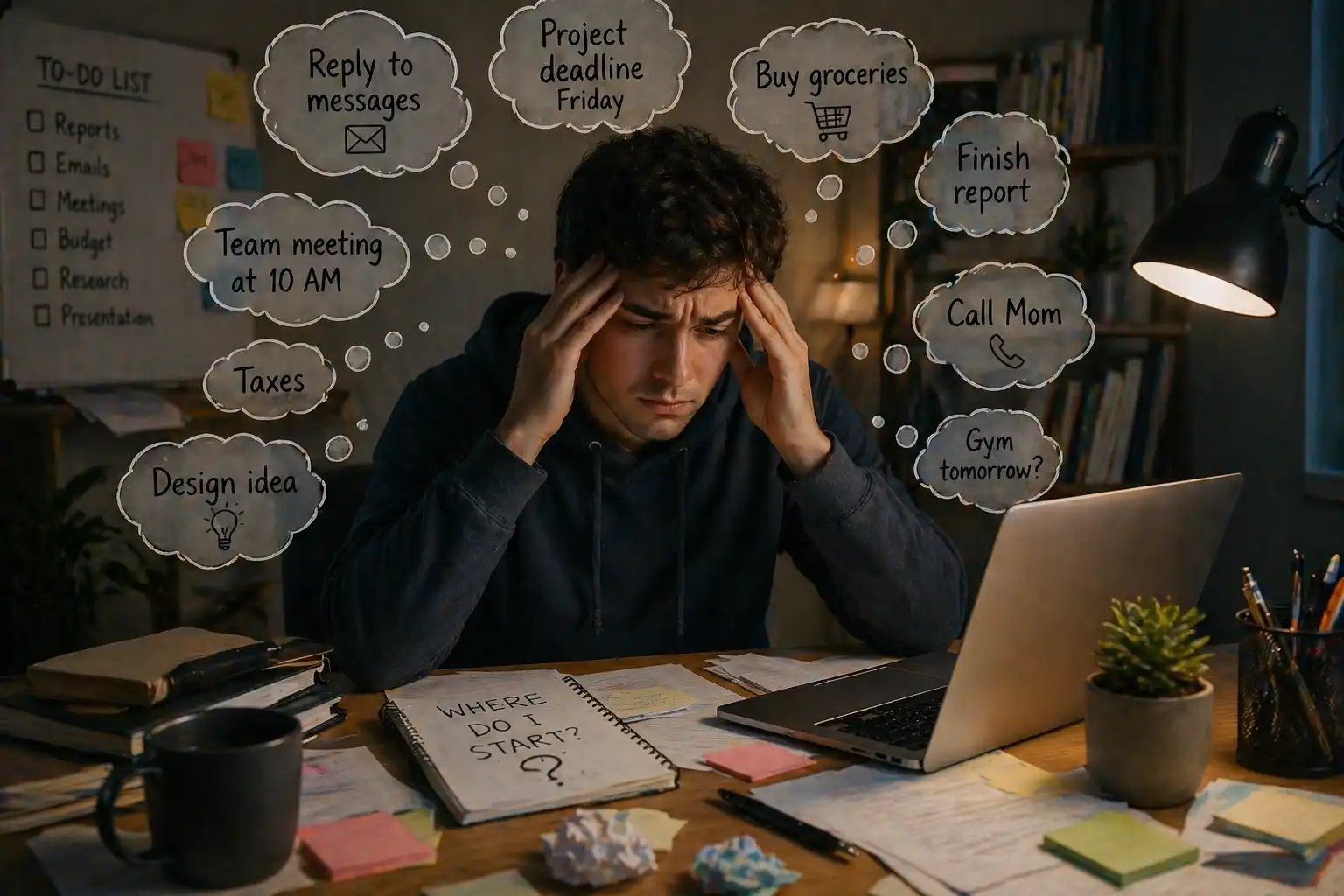
YouTube can be useful for studying, but one helpful video can easily turn into twenty minutes of recommendations. This simple watch-first system keeps learning from becoming scrolling.

The browser visual environment is a behavioral architecture. When the default is entertainment, drift does not require weakness — it requires nothing. A work profile changes the default so that focused work is the path of least resistance.

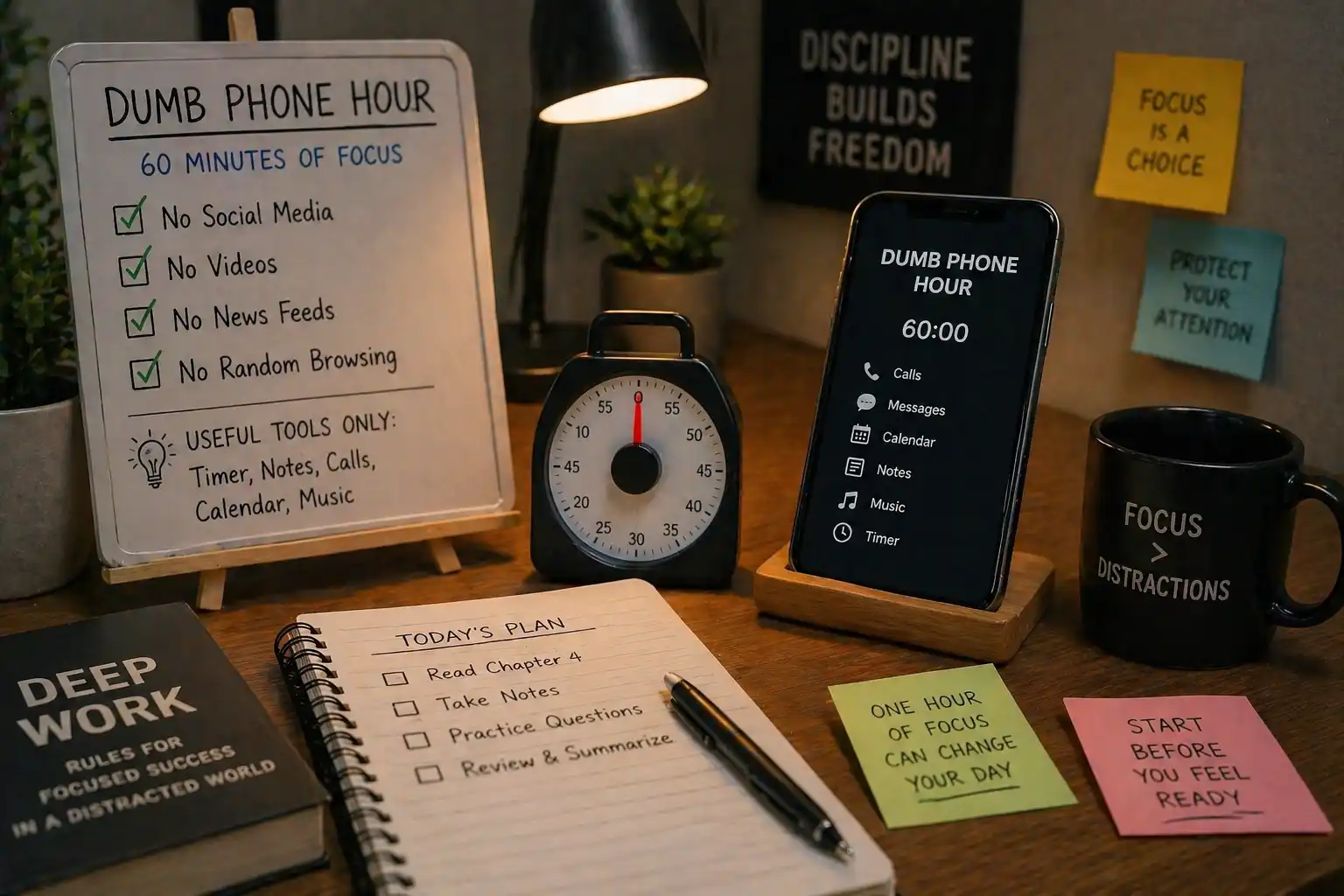
You do not need to quit your smartphone. But turning it into a boring tool for one hour can make the beginning of study or deep work much easier.
Starting the workday inside team chat can make your attention reactive before the real work begins. Opening one important document first can change the direction of the day.

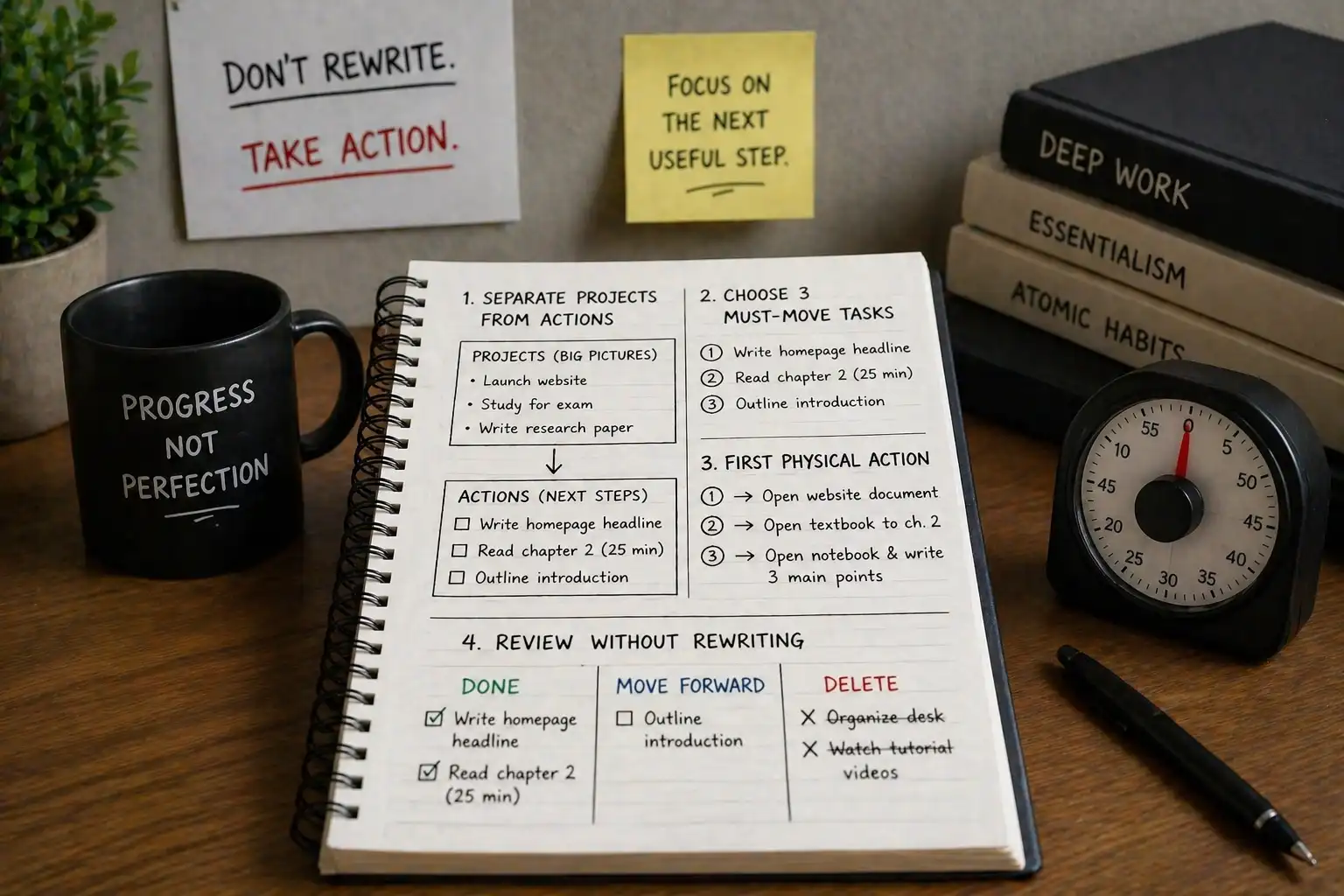
Rewriting a task list delivers the feeling of productivity without its cost. Understanding the behavioral psychology behind this pattern — and what research shows about task specificity — is what actually turns the list into a starting tool.
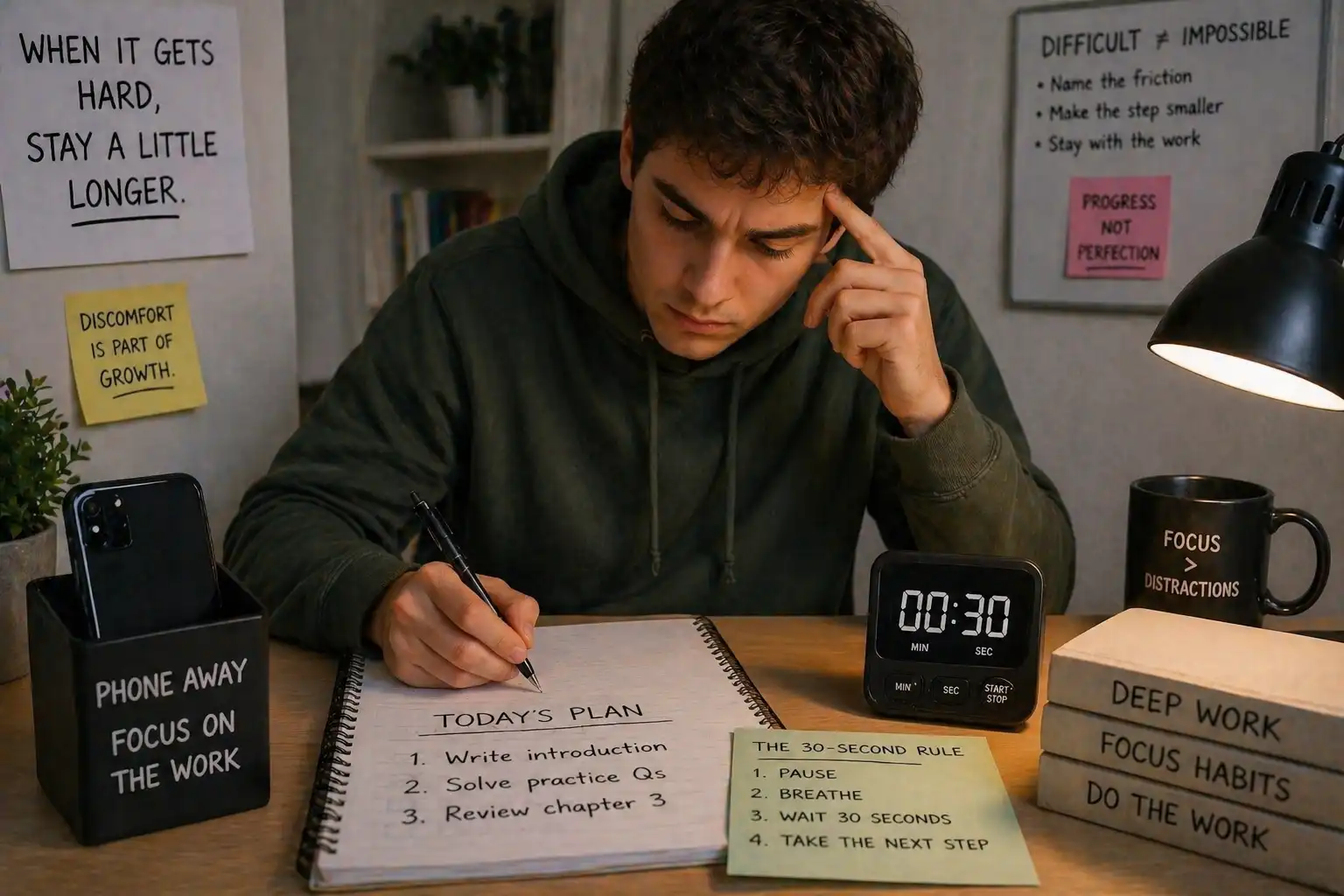
For a long time I thought I got distracted when I was bored. But when I actually paid attention, the phone appeared at a very specific moment — not during the easy parts, but the instant something got slightly hard.
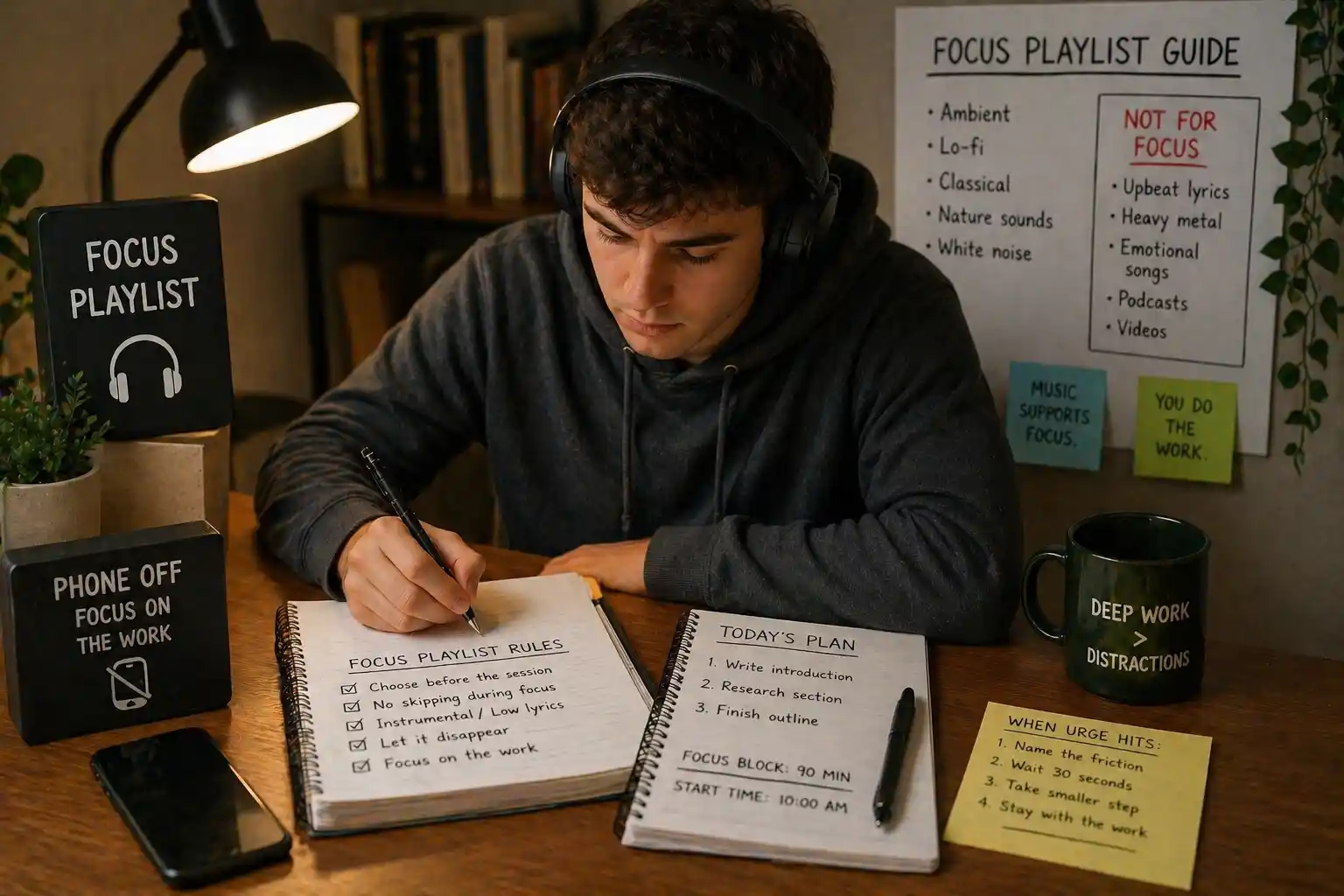
Music can help focus, but choosing the wrong kind of playlist can turn into another source of switching, searching, and distraction.
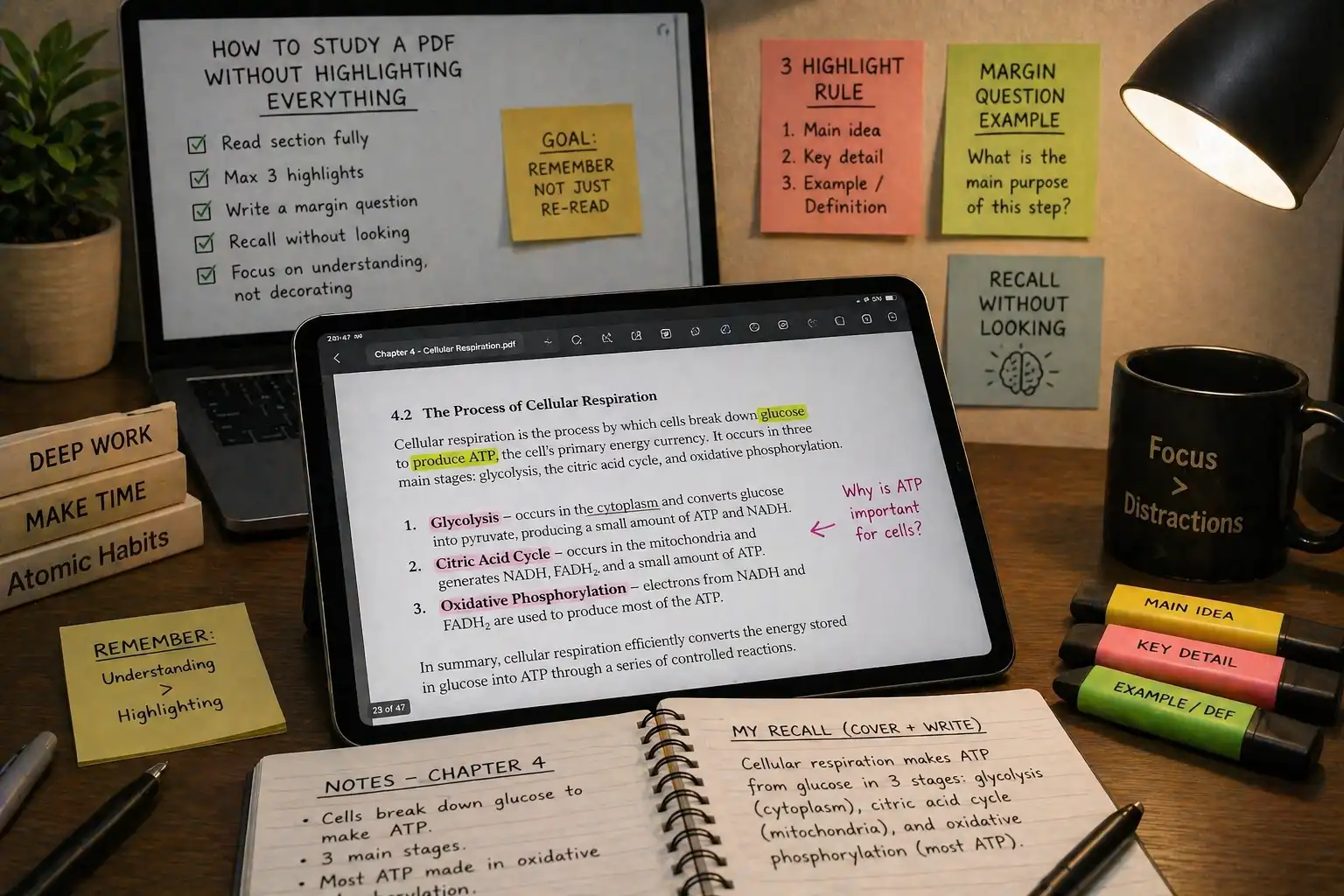
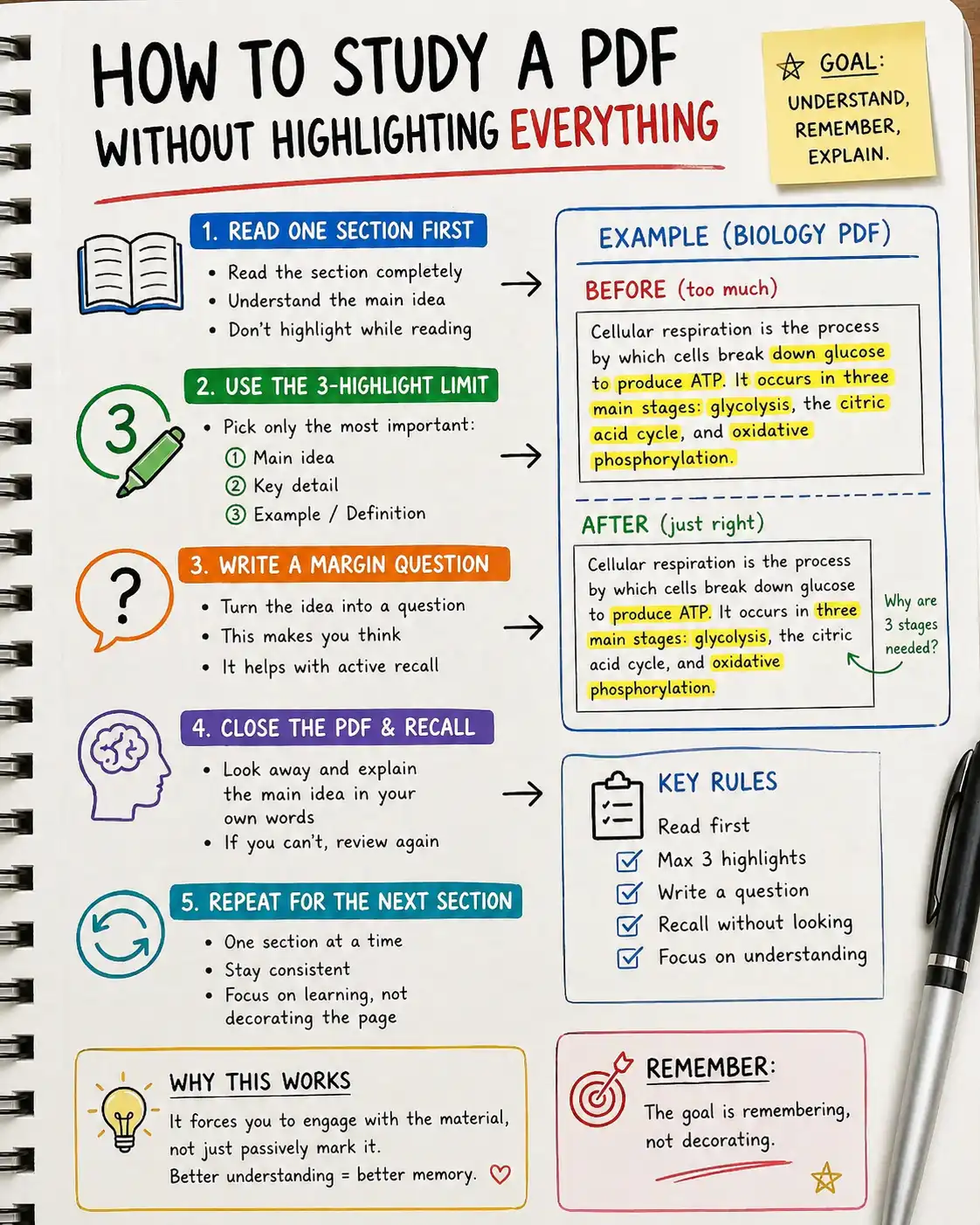
Highlighting a PDF is not studying — it is curating. Research on retrieval practice and the testing effect shows that reading is preparation for learning, not learning itself.
A meeting in 20 minutes can quietly ruin the time before it. Here is how to use short pre-meeting blocks without drifting into useless checking.

A bad test result feels personal because the brain interprets failure as a threat, not a data point. The gap between those two responses is where recovery actually lives.
Random thoughts interrupt focus not because you are undisciplined, but because your brain is doing its job. A distraction parking lot works with that mechanism instead of fighting it.

Some study days fail because the plan assumes full energy. A low-energy study plan helps you keep progress alive when your brain feels tired, slow, or resistant.

The research loop before writing is not a knowledge problem. It is a generation anxiety problem. Understanding why the blank page triggers the browser is the first step toward fixing it.
Video calls are cognitively expensive in ways that in-person meetings are not. A recovery block after each call prevents the cognitive overhead from carrying into the next task and degrading the rest of the day.
Digital notes can become messy fast when too many windows are open. The one-screen rule helps students study from notes without turning the session into tab switching.

Research feels productive, but it can quietly become avoidance. The one-sentence rule helps you stop opening tabs randomly and return to the actual work faster.

When you cannot start, the problem is usually more specific than it feels. Research on task avoidance identifies four distinct types of resistance — and each requires a different response. The 3-line reset is a diagnostic and an activation method in one.

The first minutes of a work session fail not from lack of motivation but from a well-documented gap between intention and action. The before-you-sit-down note solves this by externalizing your start intention before competing stimuli can override it.

Small gaps feel useless because of a well-documented cognitive bias — not because 15 minutes is actually too short to matter. Research on temporal discounting and attention residue shows why these windows disappear and what makes them recoverable.

I used to end most workdays feeling like I had been busy without producing anything I could point to. The problem was not the number of hours. It was that the hours had never accumulated into a single coherent block of work — and a small structural change is what eventually fixed it.

I used to think my constant phone checking was a discipline problem — that I needed to be less restless, more present, more in control. What I eventually noticed was different. I had not been picking up the phone to do anything. I had been picking it up because of what I saw when I unlocked it.

If every morning starts with trying to remember where you left off, your real problem may be the way you ended yesterday. This time management system shows how a 7-minute tomorrow handoff can make the next day easier to start.

Not all tiredness means you need rest. Learning to distinguish productive tiredness from genuine depletion can stop you from pushing past the point where work becomes harmful — or quitting when you still had more to give.

Working until you have nothing left often costs you the next morning. The soft stop rule is about ending work while you can still describe what comes next — and why that one shift changes how every following day begins.
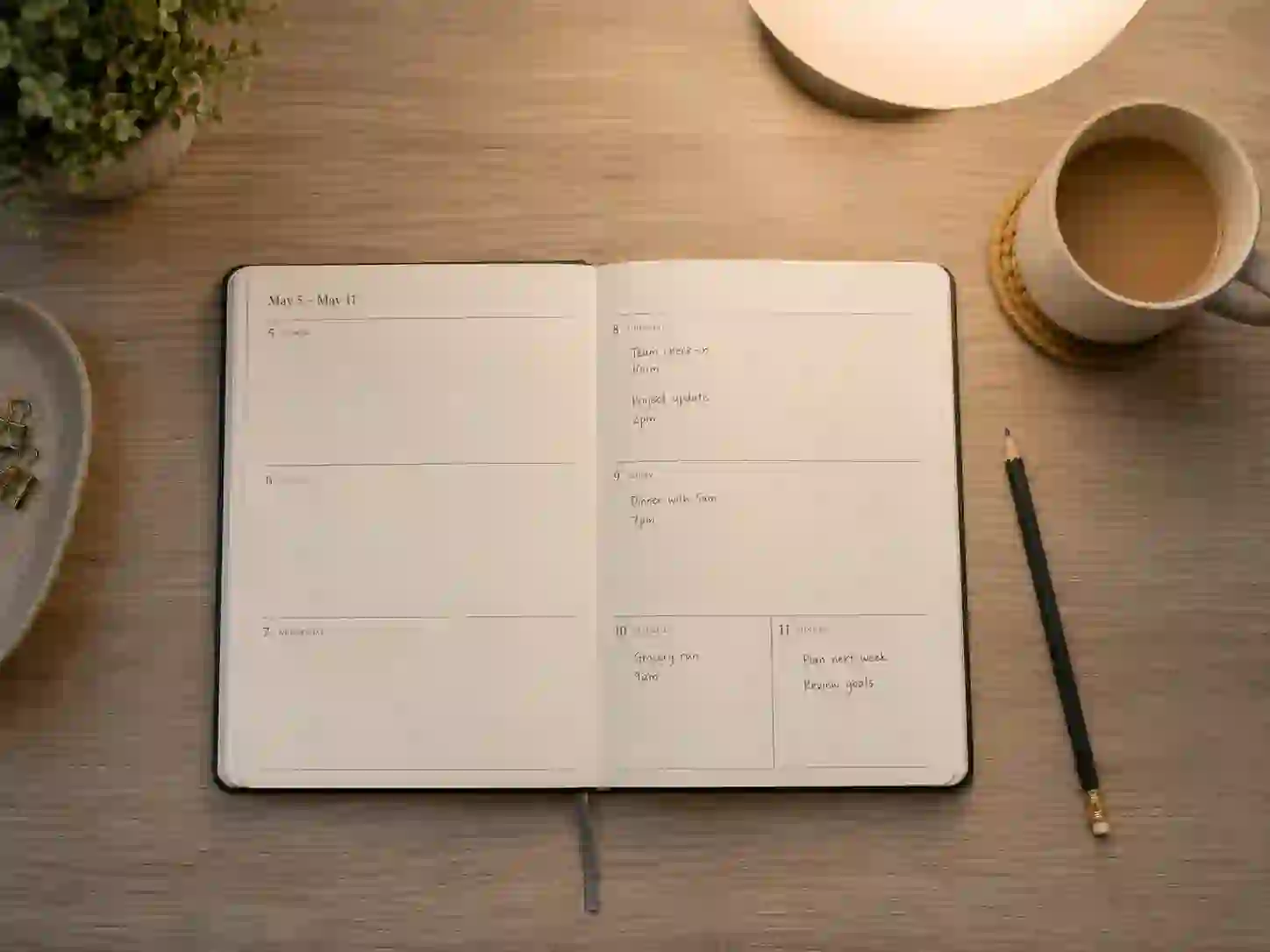
Monday mornings are hard not because of the volume of work ahead, but because context reconstruction is cognitively expensive. A short Sunday setup moves that cost to a lower-stakes moment — so Monday inherits a clear starting point rather than a blank one.
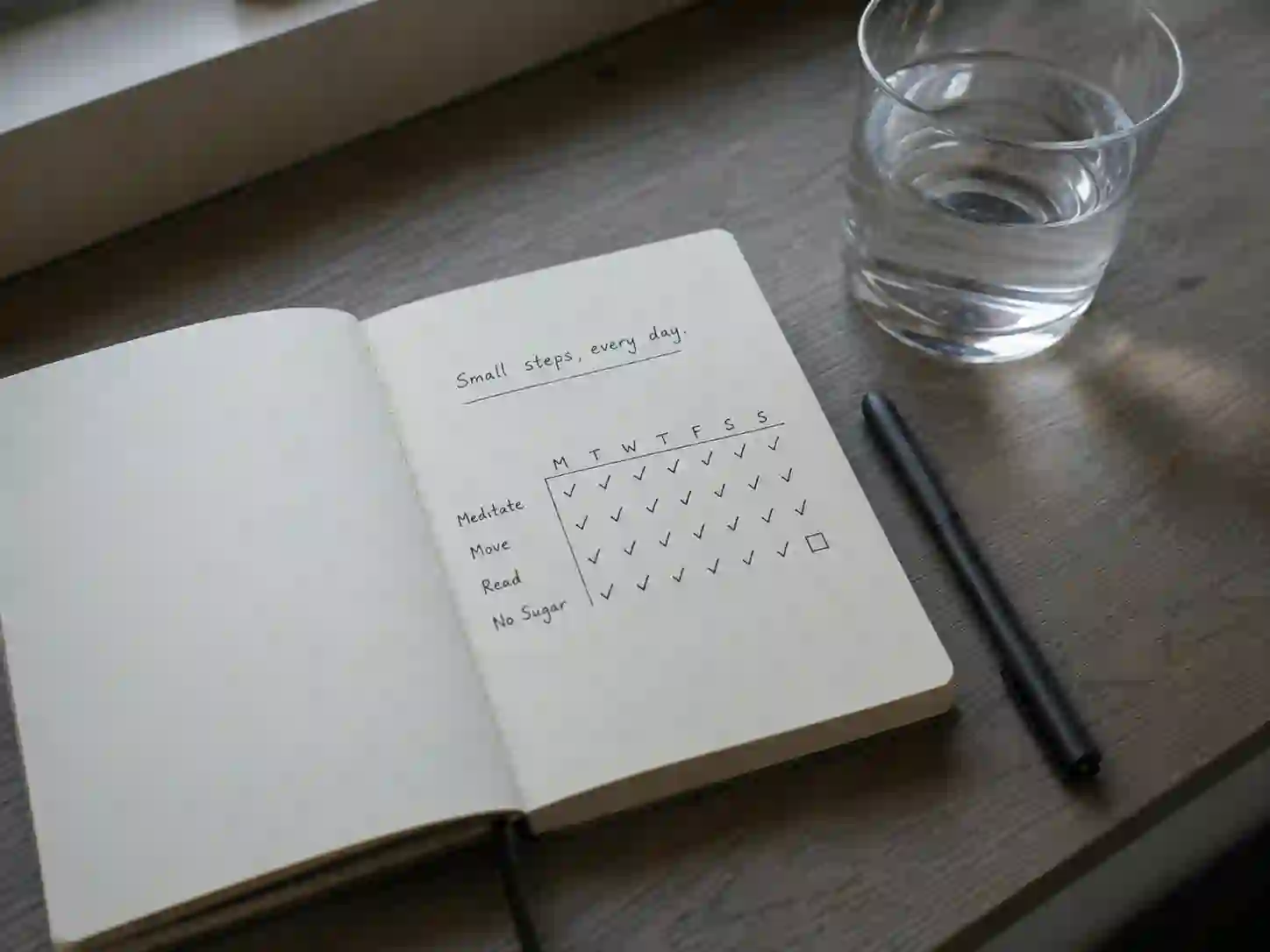
Most habits are built for good days. They work when motivation is available and conditions are right, then collapse the moment either disappears. This guide covers the structural changes that make habits durable across bad days.